

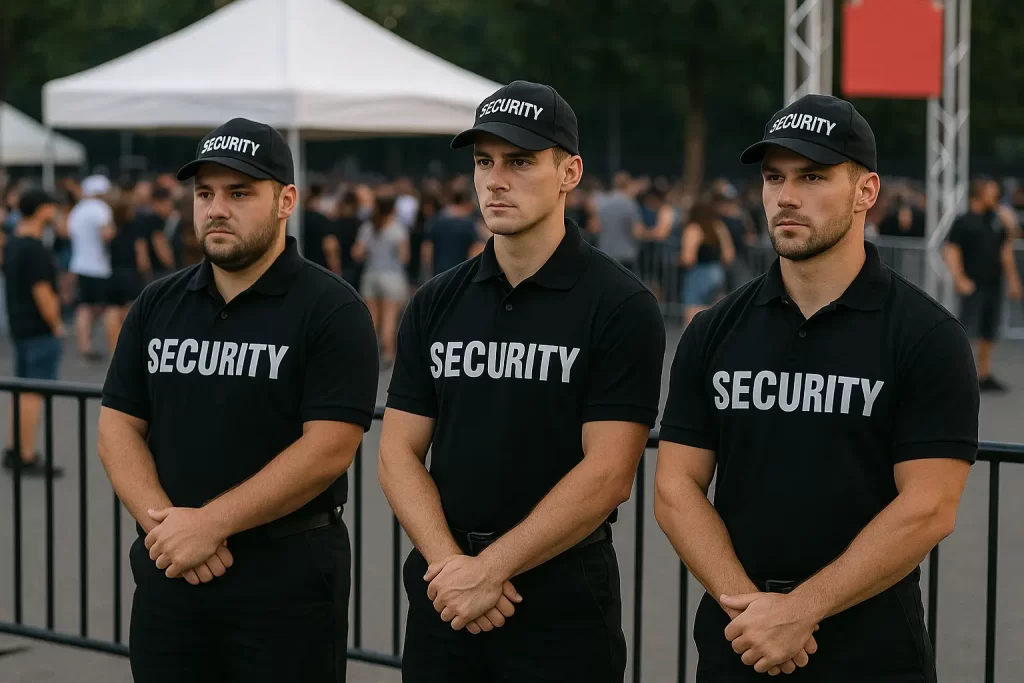
Effective crowd management and access control are crucial for ensuring safety during any event. Standing security guards play a vital role in maintaining order, checking credentials, and preventing unauthorized access. By managing entry points and enforcing rules, they ensure the event runs smoothly and securely. Professional security guard services enhance the safety of both guests and staff. Whether it’s a concert, conference, or festival, having trained security guards for events ensures a controlled, safe, and well-organized environment for everyone involved.
What is a Standing Security Guard?
A standing security guard is a trained professional responsible for maintaining security from a fixed position, such as entrances, exits, or restricted areas. Unlike mobile patrols, these guards remain alert at a single location to monitor activities and deter suspicious behavior. Their presence not only prevents unauthorized access but also provides a visible layer of protection that deters potential threats during event operations.
Why Access Control is Crucial for Events?
Access control is essential for ensuring that events remain safe, organized, and enjoyable for all attendees. Without proper access control security, unauthorized individuals can disrupt proceedings or pose safety risks. Professional security guards ensure that only guests, staff, and vendors with valid credentials can enter. This process reduces crowd congestion and helps event organizers maintain smooth operations. By employing trained access control security guards, event venues enhance both safety and efficiency while building trust among attendees.
Key Roles of Standing Security Guards at Event Venues
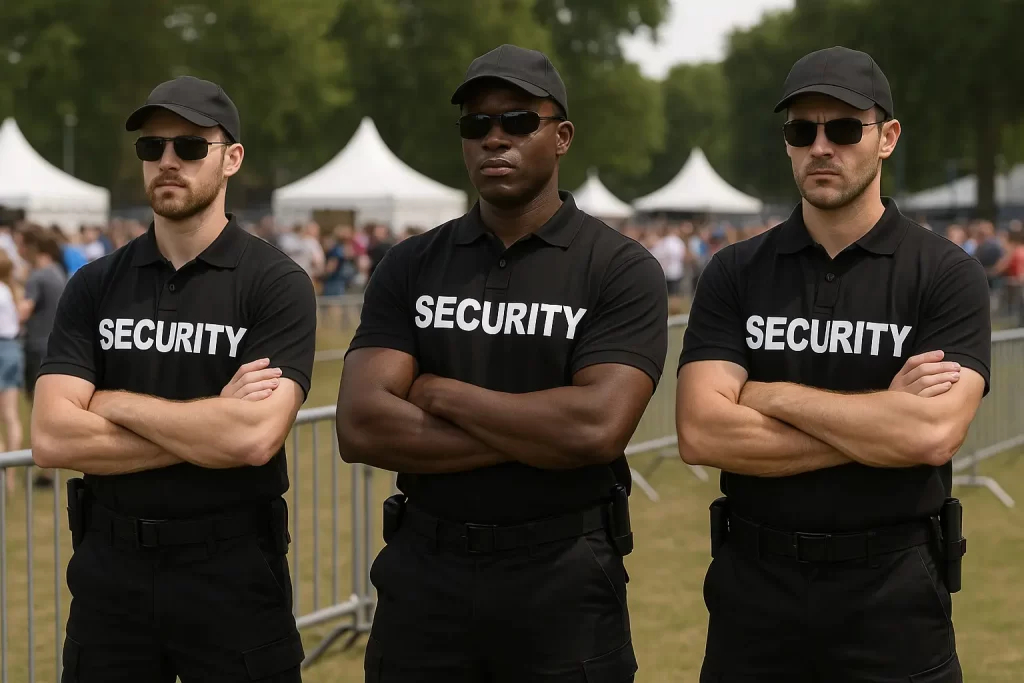
At large or private events, standing security guards are the foundation of effective crowd management and access regulation. Their presence ensures safety, order, and professionalism while preventing unauthorized access. Professional event security guards assist organizers in maintaining smooth operations, protecting attendees, and providing a secure event environment.
Below are the key roles and responsibilities these trained guards perform to keep events safe, organized, and incident-free.
1. Monitoring Entrances and Exits
Standing guards are strategically stationed at all key access points, including entry and exit gates, VIP zones, and restricted areas. Their role is to control who enters and exits, while ensuring a steady and safe flow of people.
Primary Duties:
- Ticket and ID Verification:
- Check passes, wristbands, or credentials for authenticity.
- Ensure only authorized guests, staff, and vendors gain access.
- Check passes, wristbands, or credentials for authenticity.
- Visitor Screening:
- Inspect bags and belongings when required.
- Identify prohibited items or suspicious behavior before entry.
- Inspect bags and belongings when required.
- Flow Regulation:
- Manage long queues efficiently.
- Prevent overcrowding at entry and exit points.
- Manage long queues efficiently.
Key Benefit:
By maintaining tight control over entrances and exits, guards minimize risks such as trespassing, theft, and crowd surges that could jeopardize event safety.
2. Enforcing Access Control Policies
Standing security guards uphold access control protocols that separate public areas from restricted or VIP zones. Their vigilance ensures compliance with event rules and safety policies.
Core Responsibilities:
- Credential Verification:
- Confirm identification badges or digital passes for staff and performers.
- Restrict entry into sensitive areas like backstage or control rooms.
- Confirm identification badges or digital passes for staff and performers.
- Rule Enforcement:
- Enforce venue regulations on prohibited items, smoking areas, and age restrictions.
- Handle uncooperative individuals calmly while maintaining authority.
- Enforce venue regulations on prohibited items, smoking areas, and age restrictions.
- Preventive Action:
- Stop unauthorized recording, theft, or intrusion.
- Report suspicious activity to event supervisors or law enforcement if necessary.
- Stop unauthorized recording, theft, or intrusion.
Key Benefit:
Strict access enforcement prevents disruptions, protects VIPs and staff, and ensures a safe experience for every attendee.
3. Managing Crowd Flow and Behavior
Crowd management is one of the most crucial aspects of event safety. Standing security guards maintain order, guide guests, and prevent congestion in high-traffic zones.
Main Functions:
- Directing Crowd Movement:
- Guide attendees toward seating areas, exits, and amenities.
- Utilize barriers and signage to manage large groups effectively.
- Guide attendees toward seating areas, exits, and amenities.
- Behavior Monitoring:
- Identify potential conflicts or aggressive behavior before escalation.
- De-escalate tense situations using trained communication skills.
- Identify potential conflicts or aggressive behavior before escalation.
- Emergency Path Management:
- Keep emergency exits and routes clear at all times.
- Support crowd dispersal quickly and safely if needed.
- Keep emergency exits and routes clear at all times.
Key Benefit:
By maintaining calm and order, guards enhance the overall guest experience, preventing panic or bottlenecks during busy moments.
4. Pre-Event Security Planning and Coordination
Before any event begins, standing guards collaborate with event organizers to design a comprehensive security strategy. Proper planning ensures that all security operations run smoothly throughout the event.
Pre-Event Tasks:
- Site Assessment:
- Inspect the venue layout, entry points, and high-risk zones.
- Identify potential vulnerabilities in advance.
- Inspect the venue layout, entry points, and high-risk zones.
- Coordination with Event Staff:
- Work closely with organizers, vendors, and emergency responders.
- Set communication protocols using radios or mobile systems.
- Work closely with organizers, vendors, and emergency responders.
- Emergency Preparedness:
- Plan evacuation routes and assembly points.
- Conduct briefings for all guards and staff before the event.
- Plan evacuation routes and assembly points.
Key Benefit:
Proactive planning minimizes security lapses and ensures that every guard is positioned effectively for maximum coverage and readiness in response.
5. Rapid Response to Emergencies
Even with careful planning, emergencies can arise unexpectedly. Standing security guards are trained to respond quickly and effectively to protect lives and property.
Crisis Response Roles:
- Immediate Action:
- React swiftly to altercations, accidents, or medical emergencies.
- Administer basic first aid until medical help arrives.
- React swiftly to altercations, accidents, or medical emergencies.
- Coordination with Authorities:
- Communicate with police, fire departments, or paramedics as required.
- Provide accurate incident details to facilitate a quick resolution.
- Communicate with police, fire departments, or paramedics as required.
- Evacuation Assistance:
- Guide attendees safely toward designated exits.
- Maintain calm communication during emergency procedures.
- Guide attendees safely toward designated exits.
Key Benefit:
Swift action by guards during crises prevents chaos, reduces injuries, and safeguards both property and attendees.
6. Post-Event Monitoring and Exit Management
Security responsibilities continue even after an event concludes. Standing guards oversee a safe and organized dispersal process, monitoring for potential post-event risks.
End-of-Event Duties:
- Exit Flow Control:
- Guide guests toward exits in an orderly manner.
- Prevent congestion and ensure smooth traffic movement outside the venue.
- Guide guests toward exits in an orderly manner.
- Property Protection:
- Check for lost belongings or suspicious activity during cleanup.
- Secure restricted areas and equipment until the staff has cleared the site.
- Check for lost belongings or suspicious activity during cleanup.
- Incident Review:
- Record observations or security breaches for post-event reports.
- Provide feedback to improve future event safety protocols.
- Record observations or security breaches for post-event reports.
Key Benefit:
Post-event security ensures a controlled closing phase, protecting the venue, staff, and attendees while maintaining a professional image for event organizers.
Key Takeaways
- Standing guards manage event access and ensure overall safety.
- They control crowd flow and prevent congestion at venues.
- Guards enforce rules and restrict unauthorized access efficiently.
- Trained guards respond quickly to emergencies and incidents.
- Professional security enhances event safety and guest confidence.
Enhancing Guest Confidence and Event Experience
A standing security guard creates a sense of safety and comfort among guests. Attendees feel more relaxed knowing that trained professionals are monitoring the venue. This assurance leads to a more enjoyable experience, as guests can focus on the event rather than worry about security. Having access control security reassures event organizers, knowing that all areas are well-monitored and protected from potential risks.
Advantages of Hiring Professional Standing Security Guards
Hiring professional standing security guards provides numerous advantages for event organizers. They bring specialized training, discipline, and experience in managing various crowd scenarios. Their presence deters unwanted behavior, reduces risks, and ensures compliance with event protocols. Guards also enhance brand reputation by providing a safe, organized, and enjoyable environment for all attendees.
Protect Your Event With Standing Security Guards
In today’s world, ensuring event safety is not optional—it’s essential. Professional standing security guards play an irreplaceable role in managing access, maintaining order, and responding swiftly to emergencies. Whether it’s a public festival, corporate event, or private gathering, hiring trained access control security guards ensures a safe and seamless experience for everyone.
If you’re planning an upcoming event and want to maintain absolute safety and control, trust Allinace Guard Services for professional standing security guards. Request a quote for your next event and protect your assets with experts who value safety, precision, and professionalism.
Frequently Asked Questions
Yes, any event with public gatherings—such as concerts, festivals, conferences, or private parties—benefits from the presence of standing security guards for access control and crowd safety.