

Key Takeaways
- Hospital security guards are crucial for creating safe, orderly healthcare environments.
- Security guards use monitoring, surveillance, and crisis response to protect patients, staff, and assets.
- Armed security in hospitals is used in high-risk zones to prevent violence and safeguard sensitive areas.
- A trained security guard ensures smooth visitor management and emergency coordination.
- Partnering with a reliable hospital security company helps hospitals maintain a secure, peaceful atmosphere for all.
Hospitals and healthcare facilities are places of care, compassion, and healing — yet they also face daily security challenges. From managing visitors to preventing unauthorized access, the role of a security guard is crucial to ensuring a safe, controlled environment. Maintaining hospital security involves more than surveillance; it also includes safeguarding patients, staff, and sensitive medical assets. With well-trained security guards, hospitals can operate smoothly while maintaining order, safety, and trust within their premises.
What is a Hospital Security Guard?
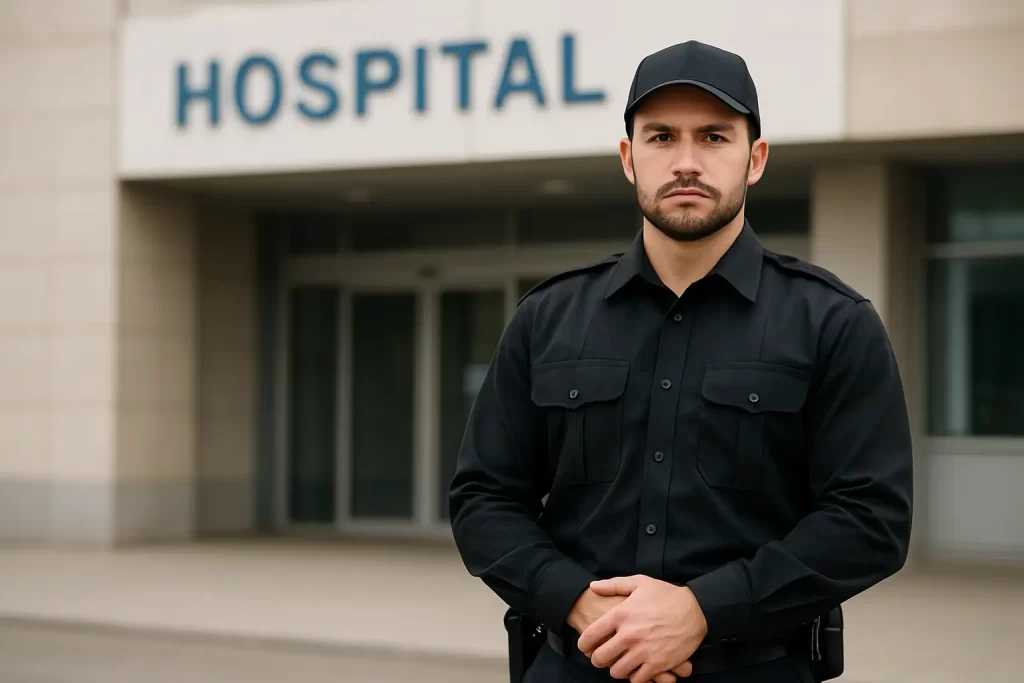
A hospital security guard protects patients, staff, and property. They monitor entrances, patrol wards, and respond to emergencies swiftly. These guards are vital to hospital security and ensure everyone in the facility feels safe. As healthcare settings modernize, demand for skilled guards rises as hospitals work to prevent theft, violence, and unauthorized access while maintaining a welcoming atmosphere.
What Does a Hospital Security Guard Do?
A hospital security guard’s duties include maintaining order in emergencies, controlling access, and handling conflicts. They coordinate with medical staff, monitor surveillance, assist in evacuations, and address threats quickly to keep departments peaceful and stable.
Types of Security Guards Hired By Hospitals and Clinics
Hospitals and clinics employ different types of security guards to meet their unique safety needs. Every kind of security guard plays a distinct role, depending on the facility’s environment, size, and patient demographics. Let’s look at the main categories found within hospital security operations.
1. Armed Security Guards
Armed security guards are assigned to high-risk areas, such as emergency rooms or psychiatric wards. Unlike other guard types, they are licensed to carry firearms and complete specialized training in threat de-escalation and crisis response. Their primary responsibility is intervening in violent incidents and security breaches to protect staff, patients, and visitors.
2. Unarmed Security Guards
Unarmed guards maintain order and prevent disturbances. They manage visitors, monitor entrances, and perform security checks. These professionals ensure daily hospital security, offering a visible deterrent without intimidating patients or staff. Their approachable presence suits patient-facing areas.
3. Mobile Patrol Security Guards
Mobile patrol guards conduct regular rounds throughout the hospital premises. As part of healthcare facility security, they ensure all areas—especially parking lots, corridors, and restricted sections—remain secure. Their mobility allows for immediate response to suspicious activity, ensuring comprehensive protection. This type of security guard is especially valuable for large or multi-building hospital campuses.
4. Reception and Access Control Security Guards
Hospitals have various types of guards, but entry-point guards are the first contact for visitors. They verify ID, issue passes, and ensure only authorized access. Their role is vital to security, as access control reduces internal risks. Trained guards in this position facilitate visitor flow while upholding hospital policies.
5. Emergency Response Security Guards
Emergency response guards are trained to react swiftly to crises such as fires, threats, or medical emergencies. Working alongside medical teams, they ensure patients and staff are safely evacuated or protected. Their skills are vital to hospital security, which prioritizes quick decision-making during critical incidents. Many hospitals rely on these specialists to ensure their emergency preparedness plans are in place.
5 Basic Duties and Responsibilities of a Hospital Security Guard
A hospital security officer’s duties go beyond protection. They balance firmness and empathy to keep everyone safe without disturbing patients. Here are five core responsibilities they manage daily.
1. Monitoring and Surveillance
Continuous observation through CCTV systems, patrols, and access logs is a key duty. Guards identify suspicious behavior early and coordinate with law enforcement if needed. By ensuring constant vigilance, security guards prevent theft, vandalism, and intrusions before they escalate into serious problems.
2. Emergency Response and Crisis Management
In emergencies, quick thinking saves lives. Guards help medical teams with crowd control, evacuations, and lockdowns. Whether facing fires, violence, or disasters, healthcare facility security relies ontrained guards who remain calm under pressure. Their readiness ensures security even amid chaos.
3. Access Control and Visitor Management
Hospitals receive hundreds of visitors daily, making entry control vital. Guards check credentials and limit access to sensitive areas. Alert security staff to admit only authorized people to patient wards or pharmacies. This process strengthens security and prevents unauthorized interference with patient care.
4. Protecting Patients and Medical Staff
Safety extends beyond property protection. Guards also ensure patients, doctors, and nurses feel secure at all times. The presence of trained armed security in hospitals helps deter aggressive behavior and potential confrontations. Their calm and professional handling of difficult situations supports both patient recovery and staff morale.
5. Safeguarding Hospital Property and Equipment
Hospitals house valuable assets, including medical instruments, computers, and confidential records. Security guards prevent theft, vandalism, and misuse of resources. Whether through patrols or delivery monitoring, a healthcare security guard service ensures property remains protected, reinforcing the hospital’s reputation for safety and reliability.
Hire Security Guard Services For Hospitals
Hospital security maintains an environment that allows care to thrive. Security guards handle access, monitor activity, manage emergencies, and balance firmness with compassion for everyone’s safety. For hospitals and clinics seeking reliable protection, Alliance Guard Services delivers expert security solutions tailored to every need.
Our trained professionals ensure safety by providing unarmed or armed guards based on risk assessments. Contact us to keep your healthcare environment secure, safe, and professional 24/7.
Frequently Asked Questions
They keep order, safeguard patient and staff safety, and deter theft or unauthorized entry.